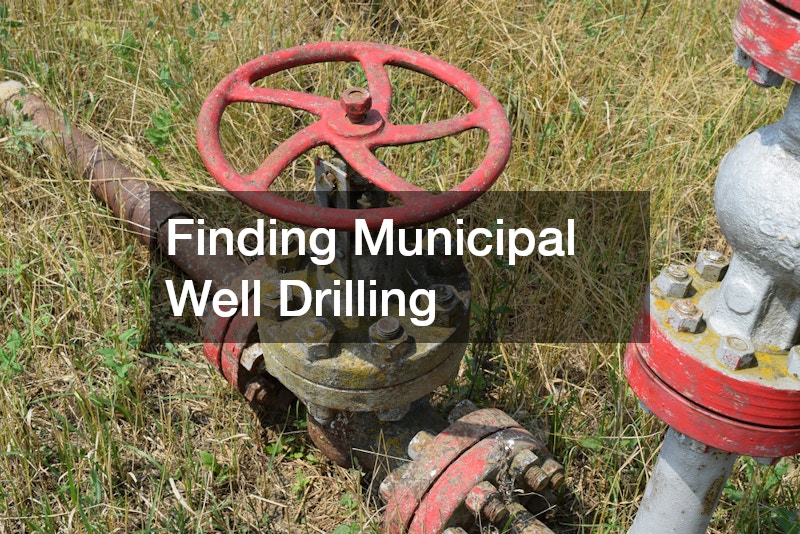
Providing clean, uninterrupted potable water to thousands of residents requires infrastructure engineered to perform under relentless demand. Unlike private residential wells that supply a single household, large-scale public water systems rely on massive groundwater extraction networks. Navigating the process of securing specialized contractors for municipal well drilling requires careful planning, rigorous engineering evaluations, and strict adherence to public health regulations.
Whether a growing township needs to expand its water capacity, a industrial park requires dedicated supply lines, or a city is replacing a contaminated municipal source, finding the right industrial drilling partner is critical to long-term public safety and infrastructure durability.
1. Scope and Complexity of Municipal Water Projects
Securing public water sources involves far higher stakes and significantly deeper technical requirements than standard residential well construction. Understanding these differences helps municipal planners, civil engineers, and public works directors establish realistic project parameters.
Scale, Volume, and Hydrogeological Yield
A typical residential well yields between 5 and 15 gallons per minute (GPM). In contrast, municipal wells are engineered to produce anywhere from 500 to over 3,000 GPM continuously. Meeting these demands requires deep boreholes—often extending hundreds or thousands of feet into major confined aquifers—and wide casing diameters ranging from 12 to 36 inches or more to house massive submersible or vertical line-shaft turbine pumps.
Multi-Jurisdictional Regulatory Compliance
Because public health depends directly on water safety, municipal well drilling operations are subject to strict oversight from state departments of environmental protection, regional water management districts, and the Environmental Protection Agency (EPA). Projects require extensive environmental impact studies, hydrogeological testing, water rights allocations, and wellhead protection zone delineations before drilling can begin.
2. Key Criteria for Selecting a Municipal Drilling Contractor
Because industrial groundwater development requires specialized equipment and advanced hydrogeological expertise, local procurement boards must thoroughly evaluate contractor qualifications.
Heavy-Duty Industrial Equipment Fleet
Not all well contractors possess the machinery required for municipal-scale depths and diameters. Look for contractors equipped with high-capacity rotary, reverse circulation, or dual-rotary drilling rigs capable of penetrating tough bedrock, unconsolidated gravels, or deep alluvial formations. The contractor must also maintain specialized support vehicles, mud-recycling systems, and high-volume test pumps.
Specialized Geological and Engineering Expertise
Executing a large-scale municipal well is as much about geology as it is about drilling. Top-tier contractors work alongside hydrogeologists and civil engineering firms to perform:
-
Test Hole Drilling and Geophysical Logging: Running electric, gamma, and caliper logs down exploratory boreholes to identify the exact depth, thickness, and porosity of water-bearing strata.
-
Sieve Analysis and Filter Pack Design: Analyzing formation samples to custom-size stainless steel well screens and gravel packs, ensuring maximum water flow while filtering out sand and fine silt.
-
Aquifer Pumping Tests: Running continuous 24- to 72-hour pump tests to evaluate aquifer yield, drawdown levels, and long-term recovery rates.
Licensing, Bonding, and Safety Records
Municipal projects typically involve public funds, requiring contractors to provide performance and payment bonds. Verify that candidate firms carry specialized master well driller licenses, extensive commercial liability insurance, and strong safety records (low Experience Modification Rates, or EMR) to protect the municipality from liability during heavy industrial construction.
3. The Municipal Well Construction Lifecycle
Understanding the multi-phase engineering process ensures smooth project management and realistic timeline expectations.
Phase 1: Site Selection and Exploratory Testing
Contractors begin by reviewing regional hydrogeological maps and drilling exploratory pilot holes. Geophysical logging pinpoints the optimal aquifer zones and identifies potential contamination risks from nearby industrial sites or agricultural runoff.
Phase 2: Drilling, Casing, and Grouting
Once the target formation is confirmed, crews ream the borehole to its full design diameter. Heavy steel casing is installed to protect the upper borehole walls, and neat cement grout is pressure-pumped into the annular space between the casing and the surrounding soil. This protective seal prevents surface runoff and shallow contaminants from migrating down into the public drinking water supply.
Phase 3: Well Screen Installation and Development
High-capacity stainless steel screens are placed opposite the water-bearing zones, surrounded by a precise gravel pack. Technicians then perform “well development”—using surging, jetting, and air-lifting techniques—to flush out drilling fluids, remove fine sediment, and establish maximum hydraulic conductivity around the screen.
Phase 4: Disinfection, Water Quality Testing, and Commissioning
Before connecting to the city distribution grid, the well undergoes chlorination and rigorous water quality testing for biological pathogens, heavy metals, volatile organic compounds (VOCs), and radiological parameters.
Conclusion
Successfully navigating municipal well drilling projects requires partnering with experienced, well-equipped contractors who understand the hydrogeological and regulatory demands of public water infrastructure. By prioritizing heavy-duty equipment capabilities, proven engineering expertise, robust safety credentials, and thorough hydrogeological testing, public works teams can secure long-lasting groundwater supplies. Furthermore, establishing comprehensive ongoing maintenance and monitoring schedules safeguards this vital infrastructure against premature wear or sudden yield drops. Investing in a properly designed, expertly constructed, and diligently maintained municipal well ensures a safe, abundant, and reliable water supply that supports public health, community growth, and economic stability for decades to come.